
Ask any NEET or IIT-JEE topper what their secret was, and the answer is rarely dramatic. It isn’t a miracle study hack or an all-nighter before the exam. It’s almost always a version of the same sentence: “I followed a routine, every single day, for two years.” Behind every rank that makes headlines is a day that looked almost boring in its consistency — the same wake-up time, the same study blocks, the same meals, the same mentor check-ins, repeated until they stopped feeling like effort and started feeling like habit.
This is the part of topper stories that rarely gets told, because it isn’t glamorous. But a structured residential day — one designed deliberately rather than left to chance — is exactly what separates consistent high performers from talented students who never quite reach their potential.
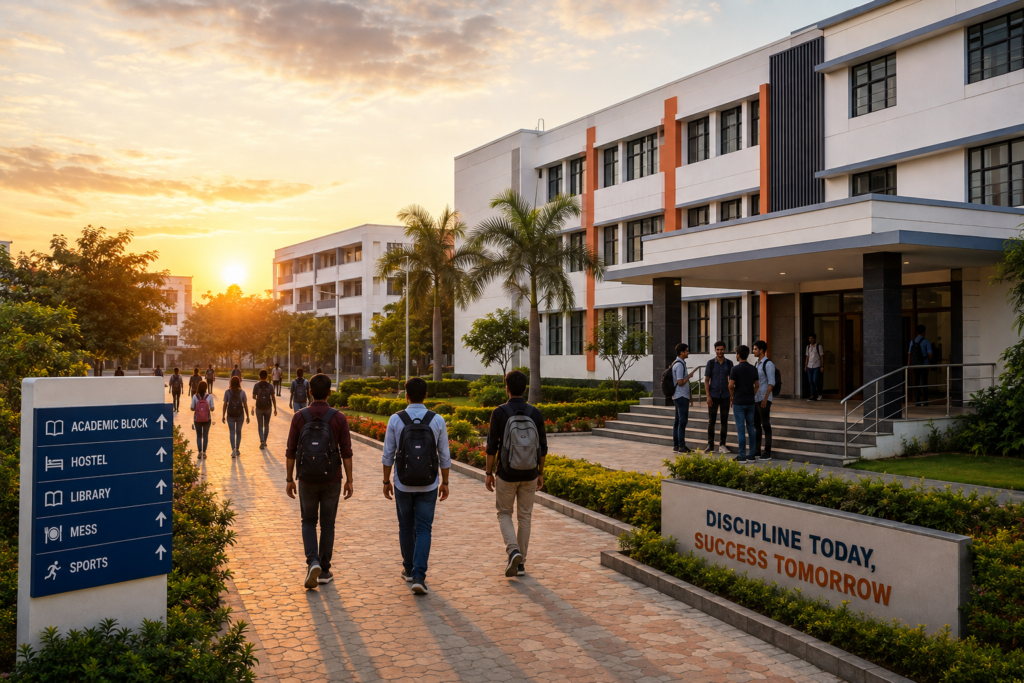
Why the First Hour of the Day Decides the Rest of It
Toppers rarely leave their morning to chance. In a well-run residential setup, the day begins at a fixed hour — not because students are naturally early risers, but because a fixed wake-up time anchors everything that follows. Early morning hours, before the mind is cluttered with the day’s noise, are often used for the subjects that demand the sharpest concentration — Physics numericals, Organic Chemistry mechanisms, or a quick revision of the previous day’s concepts.
This isn’t about squeezing in more hours. It’s about protecting the hours when the brain is freshest for the work that actually needs that freshness. A day-scholar juggling a commute, breakfast at an inconsistent time, and morning household chaos rarely gets this kind of clean start. This is exactly the gap VR Junior College is built to close — a residential structure that builds a clean, focused start into the day by default.
The Architecture of a Topper’s Day
A structured residential timetable typically moves through distinct blocks, each with a clear purpose:
- Concept blocks in the morning — new topics taught with full attention, when focus is at its peak.
- Practice blocks in the afternoon — problem-solving and application, reinforcing what was learned rather than just listening to it.
- Doubt-clearing sessions in the evening — a dedicated window where confusion from the day gets resolved before it compounds into a gap.
- Structured revision at night — short, focused review rather than last-minute cramming, followed by a fixed lights-out time.
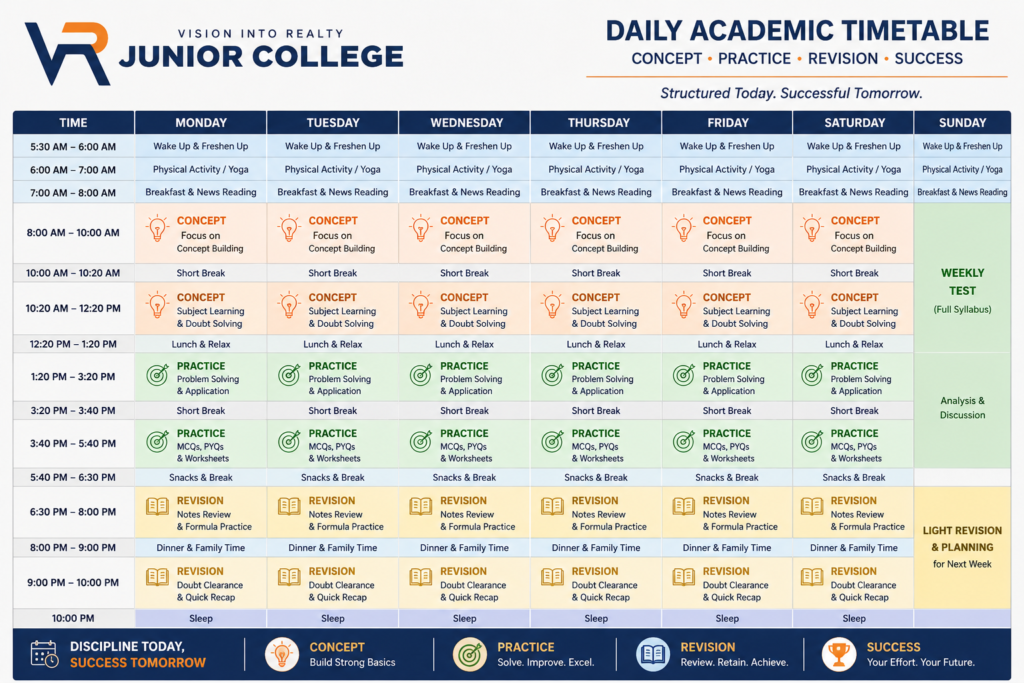
What makes this architecture powerful isn’t any single block — it’s that every block happens at the same time, every day, without needing a decision. The student never has to ask “should I study now or later?” The system has already answered that question, which frees up mental energy for the only decision that matters: solving the problem in front of them correctly.
Discipline Is the Framework — Mentorship Is What Makes It Work
A rigid timetable alone can produce a student who studies for long hours but plateaus, because discipline without direction just means doing more of the same thing, including the same mistakes. This is where mentorship changes the outcome entirely.
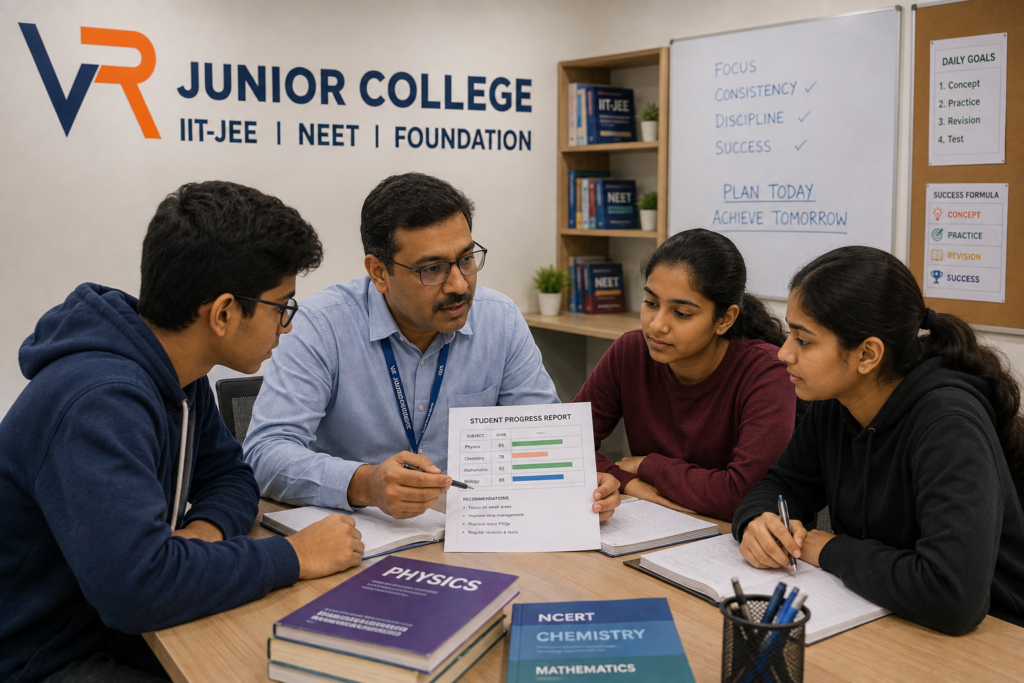
In a genuinely effective residential program, mentors don’t just supervise study hours — they track individual performance, identify weak topics through regular testing, and adjust each student’s plan accordingly. VR’s own faculty reflects this depth: an Academic Dean with 37 years of experience, senior Physics and Zoology faculty each with 20+ years in the classroom — the kind of experience that spots a struggling student’s pattern long before it shows up as a bad test score. A student weak in Inorganic Chemistry gets extra focused time there instead of generic revision across all subjects. A student who is naturally strong in Physics but anxious under timed conditions gets mock-test practice designed specifically to build exam temperament, not just content knowledge.
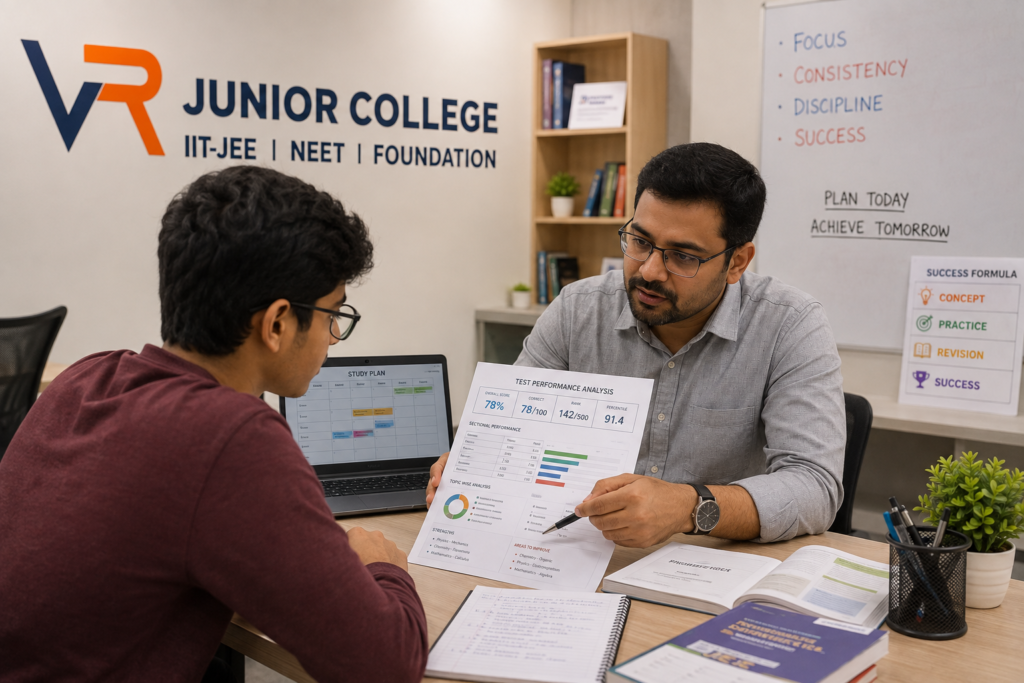
This individual attention is difficult to replicate in a large day-scholar coaching batch, where a teacher may see 100 students in a classroom and rarely gets the chance to notice that one particular student’s silent confusion in a single chapter. In a residential environment with smaller, focused batches, that gap gets caught early — often before it turns into a pattern of avoidable mistakes in the actual exam. This is also the thinking behind VR’s own 100% Improvement Guarantee — a commitment that only makes sense when mentors are actually tracking each student closely enough to catch and correct gaps as they appear, rather than at the end of the year.
Guidance Over Pressure: Building Toward the Right Path, Not Just Any Rank
One of the quieter but more important parts of a structured residential program is what happens around the timetable — the conversations that help a student figure out which path actually fits them. Not every student aiming for MPC needs to chase only an IIT seat, and not every BiPC student needs to see MBBS as the only acceptable outcome. NEET, for instance, opens doors to AYUSH, BDS, and a wide range of healthcare careers beyond MBBS alone; IIT-JEE is one route among many toward engineering, AI, IoT, and aerospace careers.
Mentors who understand this don’t push every student toward the same narrow target. Instead, they use ongoing performance data and one-on-one conversations to help each student aim at the path best suited to their strengths — reducing the kind of blind, rank-chasing pressure that often leads to burnout rather than better results. A structured day makes the discipline possible; personal mentorship makes sure that discipline is pointed in the right direction.
The Supporting Systems That Make Structure Sustainable
A timetable only holds up over two years if the environment around it supports the student’s basic wellbeing. This is often the overlooked half of what makes residential life work:
- Fixed, healthy meal times so nutrition isn’t sacrificed to study pressure.
- Consistent sleep hours, because memory consolidation and concentration both depend on adequate rest — something late-night cramming actively undermines.
- A caring hostel environment that gives students a sense of stability and safety, so emotional energy isn’t drained by an unpredictable living situation.
- A peer group all moving in the same direction, where studying at 6 a.m. is simply normal, not something a student has to justify to themselves alone.
None of these are “extras.” They are the infrastructure that allows a demanding academic schedule to be sustained without the burnout that derails so many students in the final months before their exam.
At VR, this philosophy shows up concretely — separate hostels for a safe, home-like environment, a caring cafeteria for hygienic meals, and even a ₹1-fee initiative that ensures the structure and mentorship of residential life stay accessible to economically and physically challenged students too, not just those who can afford it. The campuses span Mathrusree Nagar and Madhava Nagar (Miyapur), Hafeezpet (Chandanagar), Ayyappa Society (Madhapur), and Pedda Amberpet (Hayathnagar) — each running the same structured day.
What This Looks Like Over Two Years
The real power of a structured residential day isn’t visible on any single day — it’s visible in the compounding effect over 730 days. A student who studies with full focus for six structured hours daily, supported by mentors who catch weak areas early and guided toward the right long-term path, will consistently outperform a student who studies for ten unstructured, distraction-heavy hours without any of this scaffolding.
Toppers aren’t built in the final three months before an exam. They’re built in the quiet, repeated architecture of an ordinary Tuesday — the same wake-up time, the same focused study block, the same mentor check-in — repeated until it becomes second nature.
If you’re evaluating a residential program for MPC or BiPC preparation in Hyderabad, VR Junior College is built on this exact idea — structured daily routines, dedicated hostel and mess facilities, and personal mentorship that guides each student toward the path suited to their strengths rather than blind rank-chasing. At VR Junior College, discipline and mentorship work together, day after day, to turn consistent effort into consistent results. Visit vrjuniorcollege.com to explore campuses, courses, and admissions for 2026–27.
